







How to grow and care for Hoya australis R.Br.
plant care guide about watering, fertilizing, trimming, repotting, cutting, propagating Hoya australis R.Br.
Hoya australis R.Br. 101 - Plant Care Instructions
Bright direct light
18C° ~25C°
Every 14 days
Botany Encyclopedia
Genus : Hoya
🔖 Care Tips
Growth may be slower compared to other houseplants. If you see small white bugs on the leaves and stems, they might be scale insects. These insects leave sticky residue, which can lead to sooty mold, so be cautious. You can remove the bugs with a cotton swab or cloth, but this method has limitations. Using a professional pesticide is more effective. Natural remedies like neem oil are slower and weaker than pesticides but are safer. On the other hand, pesticides work quickly and effectively but can be harmful to pets and children. Choose according to your situation. To prevent resistance, alternate between two or more pesticides instead of using the same one continuously.
🏝️ Habitat Conditions
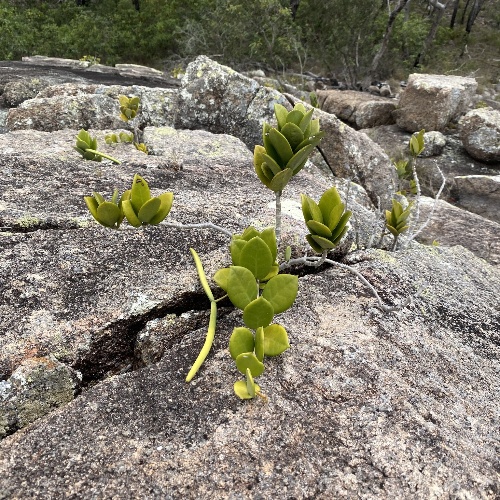
This plant primarily grows in Asia and Australia. It thrives in tropical and subtropical regions, often attaching to trees or rocks. It prefers a humid and warm environment and grows well with indirect light.
🪨 Soil Mix
Plants that grow attached to trees or rocks should be planted in well-draining soil. A common mix is 40% coco chips, 30% potting soil, 20% perlite, and 10% charcoal. However, the ratio can vary depending on the situation and environment.
🌡️ Environment
Maintain a temperature of 21-25°C, and keep it above 13°C in winter. When moving plants outdoors in summer, gradually acclimate them to light and temperature over 7-14 days. Humidity should be 40-70%, as plants prefer a humid environment. Increase humidity by misting or placing a water tray nearby when it's dry. Ensure good ventilation when humidity is high to prevent mold growth.
👀 Characteristics details
This plant typically grows by attaching to other surfaces, so it needs support. You can design the support attractively to use it as an interior decoration.
☀️ Light
This plant typically grows attached to trees or rocks, so it is well adapted to environments with indirect light in the shade. Be careful of direct sunlight, as it can scorch the leaves. It thrives with prolonged exposure to indirect light.
💧 Water
Water when the soil is dry. Hoyas don't like their roots to be too wet, so check the soil before watering. Hoyas are semi-succulent and store water in their leaves. If the leaves wrinkle, it's a sign of water shortage, so water immediately. Even semi-succulent plants can experience slowed growth if their leaves wrinkle multiple times due to lack of water.
🌱 Propagate
Use sterilized tools to cut a stem with at least one node at an angle. Let it dry for 3-4 hours, then place it in soil or water for propagation. 1. For water propagation, avoid transparent containers. Place the stem in water, and once roots appear, use hydroponic fertilizer. When roots are 5-7 cm long, transfer to soil. 2. For soil propagation, plant the cutting deeply in soil without fertilizer. After planting, avoid exposing the cutting to bright light. Gradually increase light exposure to help it adapt. Maintain high humidity and a temperature of 20-25°C.
🪴 Repot
Due to its slow growth rate, it is recommended to repot it every two years in the spring. It is easier to manage Hoya in a smaller pot compared to other houseplants. Some believe that the roots need to fill the pot to a certain extent for the plant to bloom.
💊 Fertilize
During the growing seasons of spring and summer, it is recommended to use fertilizer 1-2 times a month, adhering to the recommended dosage. Avoid fertilizing immediately after repotting; wait 2-4 weeks before applying fertilizer.
🌺 Flower
Flowers typically bloom from spring to summer, but indoors, with the right conditions, they can bloom more than three times a year. In winter, reduce fertilizer, increase light, and keep the environment dry to encourage spring blooming. Be cautious of excessive dryness, as it can damage leaves. If flower stalks are present, water earlier than usual to prevent the plant from drying out. Do not remove the flower stalks after blooming, as they can produce flowers again. If growing from seeds, it takes about 3-5 years for the plant to mature and bloom. For quicker blooms, consider adopting a propagated plant.
😵 Toxicity
Non-toxic and safe for pets and children.
water
How to water Hoya australis R.Br.
How often should I water?
check Hoya australis R.Br. Every 14 days if it needs water when it’s very cold (below 5℃), water less frequently
When do I need to water?
The soil should be at least 90% dry before watering again. this means about every 2 weeks in the warm season and about every 4 weeks in the cold season
Signs that it really needs water
leaves look a little wrinkled
Light & Location
How much light does a Hoya australis R.Br. need?

Bright direct light
Bright indirect light
Grow light
Light preference
Hoya australis R.Br. likes Bright direct light, Bright indirect light, Grow light day. The brighter the space, the better this plant grows.
Check if there’s an optimal place in your house!
This plant prefers
2K ~ 20K lux to thrive!
0
20K~
2K
20K
Temperature
Natural habitat
-15
8~38℃
45
Houseplants
-15
18~25℃
45
Plants that grow in the wild and those that grow indoors prefer different temperatures. If you grow Hoya australis R.Br. at home, make sure the temperature is 18~25℃.
Humidity
Ideal humidity
0
40~70%
100
Hoya australis R.Br. prefers humidity about 40~70%. If necessary, increase humidity by misting, humidifier.
Fertilize
Collective Knowhow
When should I fertilize?
Only when your plant is healthy
How frequently should I fertilize?
1-2 times in growing season. A pinch for a small pot.
Characteristic
The taxonomic classification of Hoya australis R.Br. is as follows. - Kingdom: Plantae, Phylum: Tracheophyta, Class: Magnoliopsida, Order: Gentianales, Family: Apocynaceae, Genus: Hoya, Species: Hoya australis
| Characteristic Name | Characteristic Value |
|---|---|
| Lifespan | Perennial |
| Habitat | America |
| Taxonomy Name | Taxonomy Value |
|---|---|
| Phylum | Tracheophyta |
| Class | Magnoliopsida |
| Order | Gentianales |
| Family | Apocynaceae |
| Genus | Hoya |
| Species | Hoya australis |
Is your plant sick?
Track what happened. We’ll let you know the cause and treatment shortly!


1:1 Expert Help
You’ll get professional feedback within 24 hours from an expert on our team.
feedback will include