







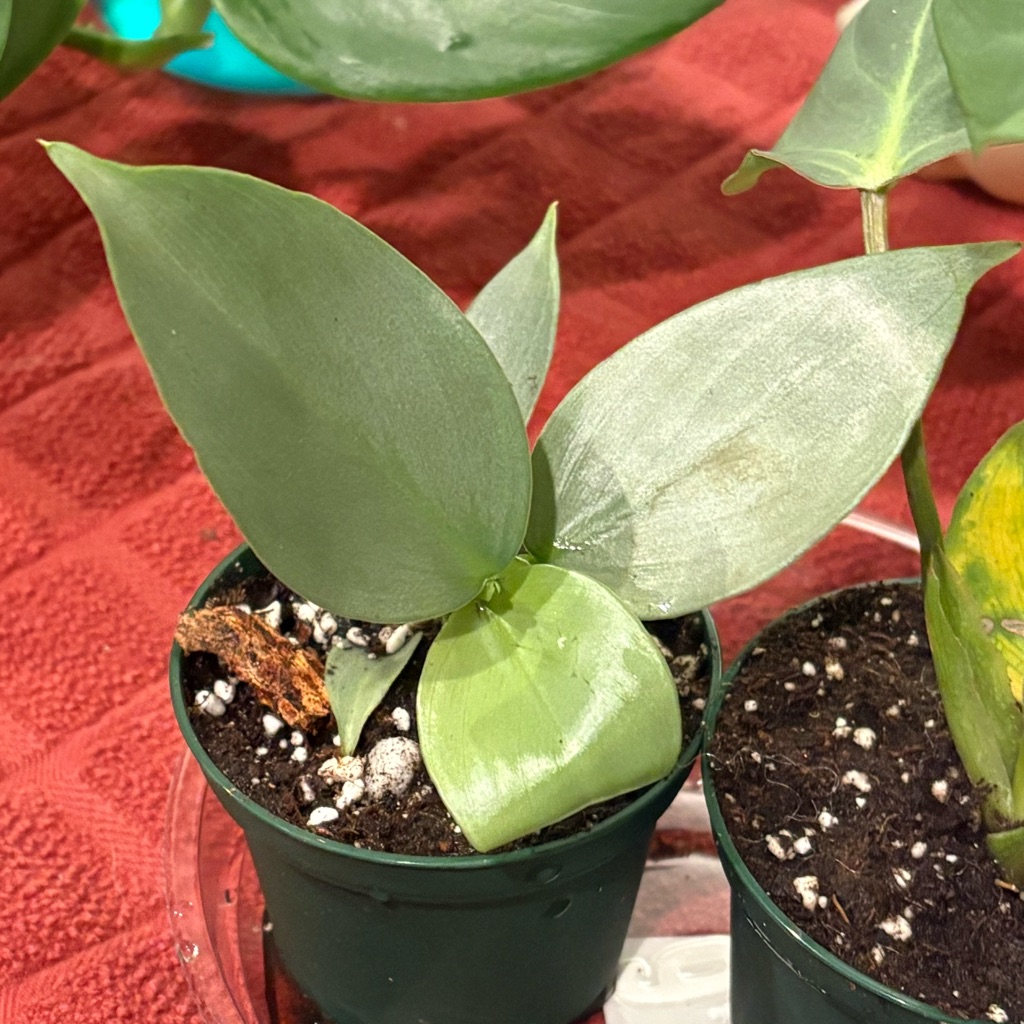






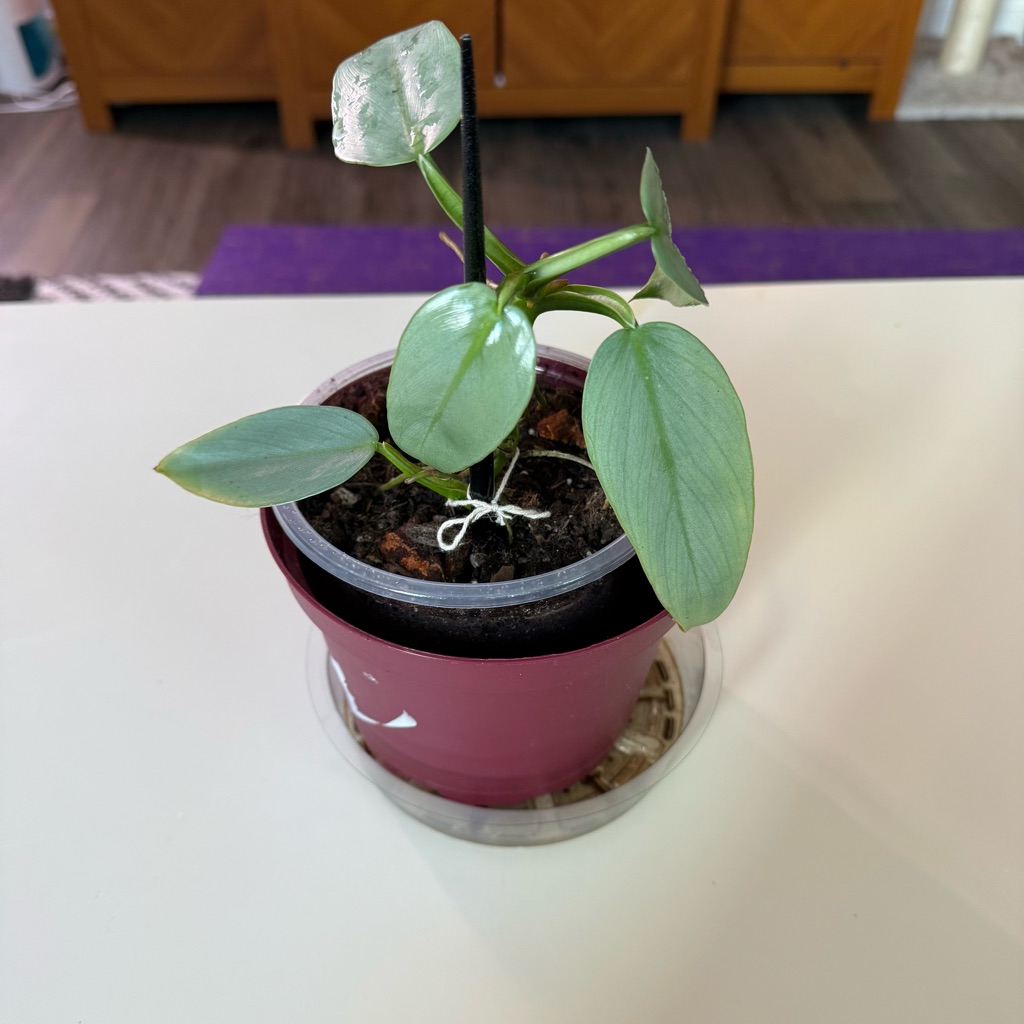


How to grow and care for Philodendron hastatum
plant care guide about watering, fertilizing, trimming, repotting, cutting, propagating Philodendron hastatum
Philodendron hastatum 101 - Plant Care Instructions
Bright direct light
18C° ~24C°
Every 7 days
Growth Observation wiki
new leaf


Botany Encyclopedia
Genus : Philodendron
🔖 Care Tips
If a plant is dry, sticky liquid may appear from young leaves. Increase humidity and wipe the leaves to prevent stains and pests. Guttation is a natural phenomenon often seen in tropical plants, occurring mainly at night when the plant expels excess moisture. Be careful not to overwater. Large leaves can accumulate dust, so wipe them regularly. Hydroponic cultivation is also possible: 1. Gently shake off the roots without damaging them and secure them with something like hydroballs for stable growth. 2. Submerge only 50-60% of the roots in water to allow them to breathe. 3. Use tap water that has been left out for a day, and opt for opaque containers over transparent ones to prevent temperature changes from light exposure. 4. Change the water every 7-14 days.
🏝️ Habitat Conditions
This plant grows around large trees in the tropical rainforests of South America. It prefers warm and humid environments and thrives in indirect light rather than direct sunlight.
🪨 Soil Mix
When planting, it's best to use soil that retains moisture well and allows for good air circulation. Typically, mix 30% potting soil, 30% perlite, 35% bark, and 5% humus. However, you can adjust the proportions based on the situation and environment.
🌡️ Environment
This plant thrives in warm temperatures of 20-30°C and prefers humidity levels of 50-80%. It likes a humid environment, so if it gets dry, occasionally mist it or place a water dish nearby. However, ensure good ventilation to prevent mold, even if the humidity is high. In winter, maintain a temperature above 10°C. If the indoor air is dry, aerial roots may not grow well, so it's okay to remove them.
👀 Characteristics details
Plants can be upright, growing upwards, or creeping, spreading sideways. Upright plants benefit from support stakes, while creeping plants can be grown as hanging plants. Choose plants that suit your environment.
☀️ Light
Plants prefer indirect light over direct sunlight. They tend to grow towards the light, so rotating the pot periodically helps them grow evenly.
💧 Water
Water the plant when the surface soil is dry to avoid overwatering.
🌱 Propagate
Use sterilized tools to cut a stem with at least one node at an angle, dry it for 3-4 hours, then place it in soil or water for propagation. 1. For water propagation, avoid transparent containers. Place the stem in water, and once roots appear, add hydroponic fertilizer. When roots are 5-7 cm long, transfer to soil. 2. For soil propagation, plant the cutting deeply in soil without fertilizer. After planting, avoid exposing the cutting to bright light. Gradually increase light exposure to help it adapt. Maintain high humidity and a temperature of 20-25°C.
🪴 Repot
Repot every 1-2 years in spring due to its relatively fast growth.
💊 Fertilize
Apply fertilizer 2-3 times during spring and summer, following the recommended dosage for more vigorous growth. You may adjust the amount based on the plant's size and light exposure. Avoid fertilizing immediately after repotting; wait 2-4 weeks before applying fertilizer.
🌺 Flower
Mature plants bloom in the summer, but it's difficult to see flowers indoors. The upper part of the flower is the stamen, and the lower part is the pistil. The blooming time is unpredictable, but flowers often close at night. Red liquid may be secreted from the stamen. In nature, bats or insects pollinate the flowers, but indoors, artificial pollination should be done within 24-48 hours. Use a brush or cotton swab to transfer pollen from the stamen to the pistil. Different species can be crossbred to create hybrids. Some species self-pollinate, while others do not, so it's best to check and perform self-pollination if possible.
😵 Toxicity
Be cautious with pets and young children as it is toxic.
water
How to water Philodendron hastatum
How often should I water?
check Philodendron hastatum Every 7 days if it needs water when it’s very cold (below 5℃), water less frequently
When do I need to water?
the top 2-3 inches of soil is dry
Light & Location
How much light does a Philodendron hastatum need?

Bright direct light
Bright indirect light
Grow light
Light preference
Philodendron hastatum likes Bright direct light, Bright indirect light, Grow light day. The brighter the space, the better this plant grows.
Check if there’s an optimal place in your house!
This plant prefers
2K ~ 20K lux to thrive!
0
20K~
2K
20K
Temperature
Houseplants
-15
18~24℃
45
Plants that grow in the wild and those that grow indoors prefer different temperatures. If you grow Philodendron hastatum at home, make sure the temperature is 18~24℃.
Humidity
Ideal humidity
0
40~70%
100
Philodendron hastatum prefers humidity about 40~70%. If necessary, increase humidity by misting, humidifier.
Fertilize
💬 Gardener's know-how
Collective Knowhow
When should I fertilize?
Only when your plant is healthy
How frequently should I fertilize?
1-2 times in growing season. A pinch for a small pot.
Characteristic
The taxonomic classification of Philodendron hastatum is as follows. - Kingdom: Plantae, Phylum: Tracheophyta, Class: Liliopsida, Order: Alismatales, Family: Araceae, Genus: Philodendron, Species: Philodendron hastatum
| Characteristic Name | Characteristic Value |
|---|---|
| Habitat | Central South America |
| Taxonomy Name | Taxonomy Value |
|---|---|
| Phylum | Tracheophyta |
| Class | Liliopsida |
| Order | Alismatales |
| Family | Araceae |
| Genus | Philodendron |
| Species | Philodendron hastatum |
Is your plant sick?
Track what happened. We’ll let you know the cause and treatment shortly!


1:1 Expert Help
You’ll get professional feedback within 24 hours from an expert on our team.
feedback will include